
How Do Porta Potties Work?
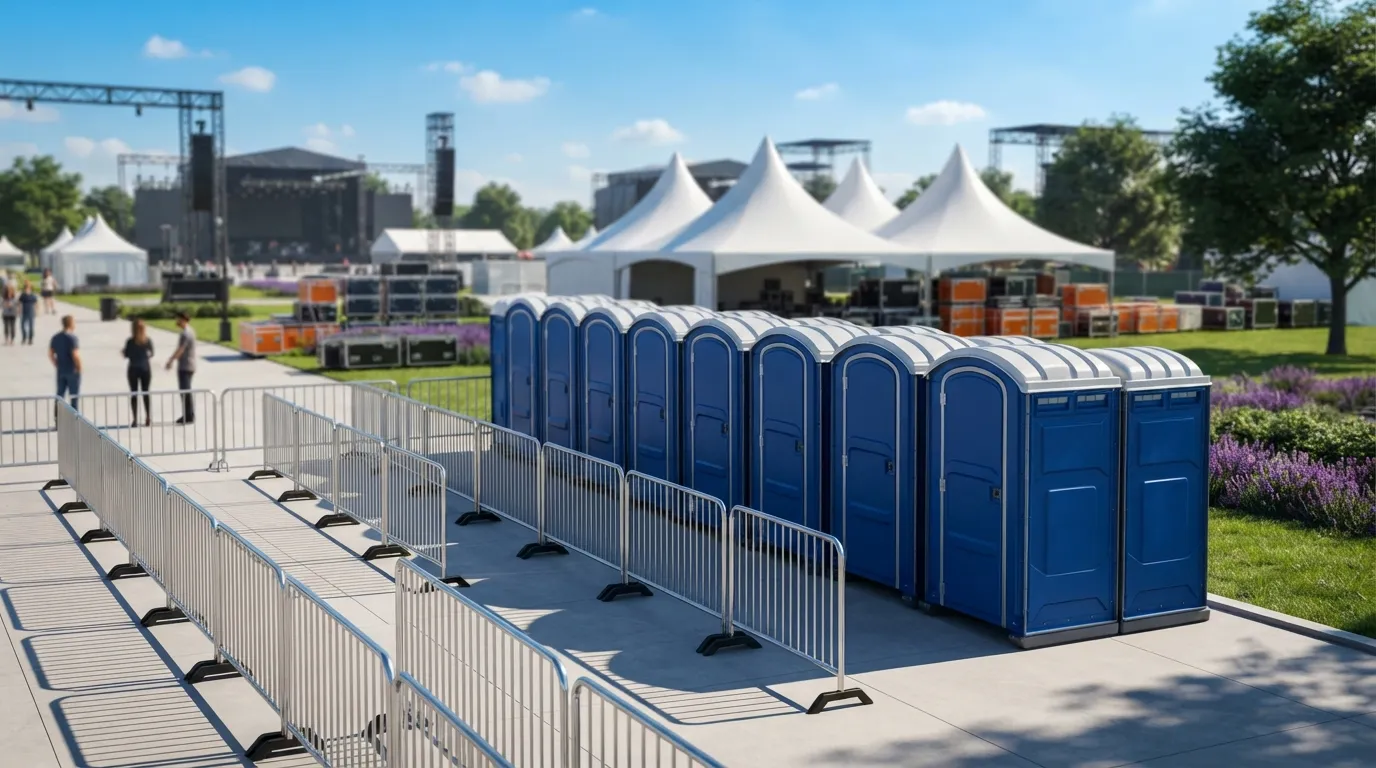
Picture a sealed box sitting on top of a tank. That is the whole system. The unit itself stands about 92 inches tall and covers roughly 44 by 48 inches of ground, so it fits in a driveway corner or a tight construction lay-down yard without trouble. Waste drops straight into the holding tank, where a blue or green deodorizing chemical breaks down solids and knocks back odor between services. There is no plumbing to hook up, which is why portable toilet rental works on raw land outside Winston-Salem the same way it works downtown. A vent stack pulls odor up and out rather than back into the stall. On a construction site, a worker walks over, uses the unit, and is back on the clock in under two minutes; that speed is the entire point. For jobs that run long, standard porta potty rental units get serviced on a weekly interval as a baseline, per ANSI/PSAI Z4.3, though busier sites often need more frequent pumping. If you are trying to figure out how many stalls a crew needs, OSHA 1926.51(c) sets the ratio: one toilet seat for 20 workers or fewer, scaling up from there.
How Do Flushable Porta Potties Work?
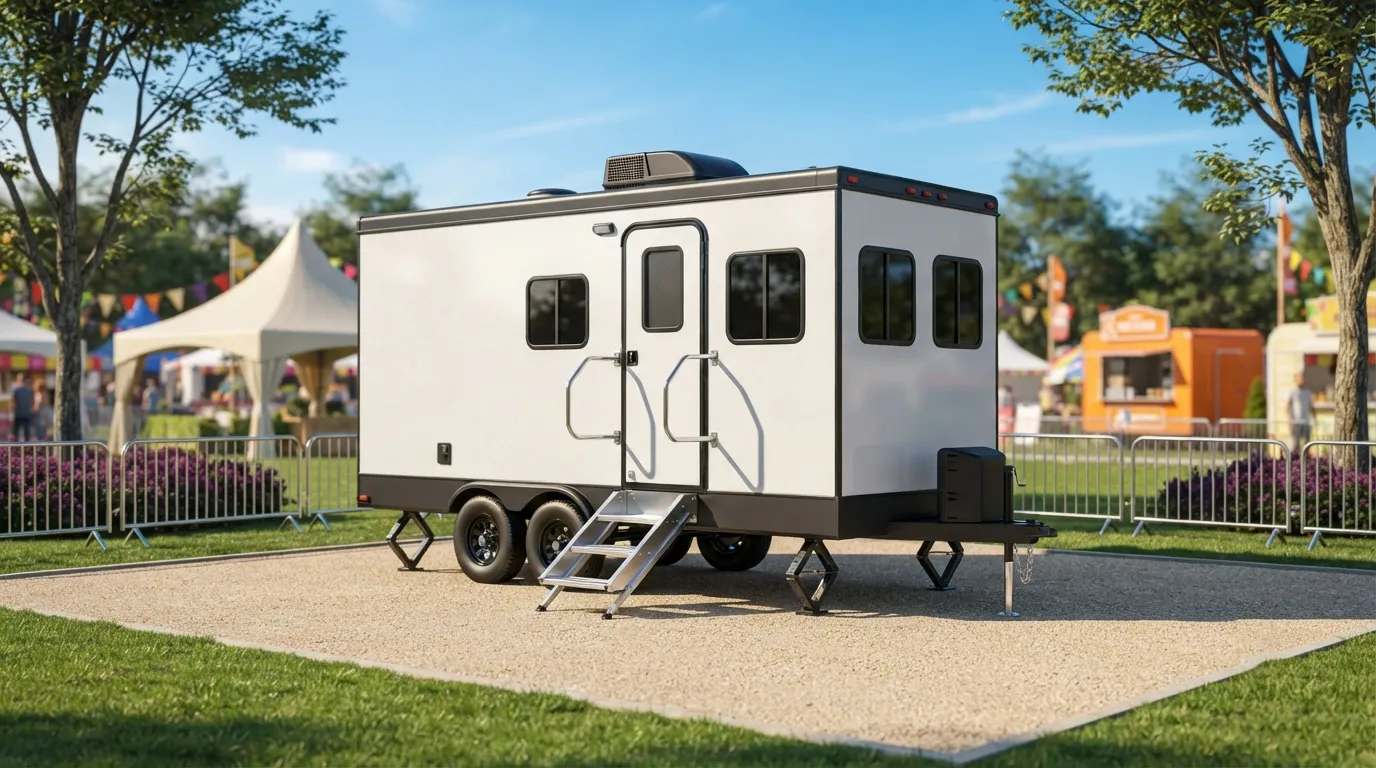
A deluxe flushable unit uses a small onboard freshwater tank and a foot pump or pressurized flush valve to rinse the bowl after each use, instead of leaving waste sitting in open view like a basic unit. The flush water joins the waste in a separate holding tank, so you still need a pump-out, just less often relative to how it feels for guests. This is the option most wedding and event clients pick because it feels closer to a real bathroom. Deluxe flushable porta potty units cost more than standard ones because of the added tank and hardware, but for a backyard wedding in Winston-Salem or a corporate picnic, the upgrade is usually worth it. If your event needs something closer to a full restroom, with sinks and separate stalls, look at restroom trailer rental instead. Either way, placement matters: units need level, stable ground, similar to the firm and slip-resistant surface standard under ADA Standards 302.1, even when the unit itself is not the accessible model.
How Does a Portable Sink Work?
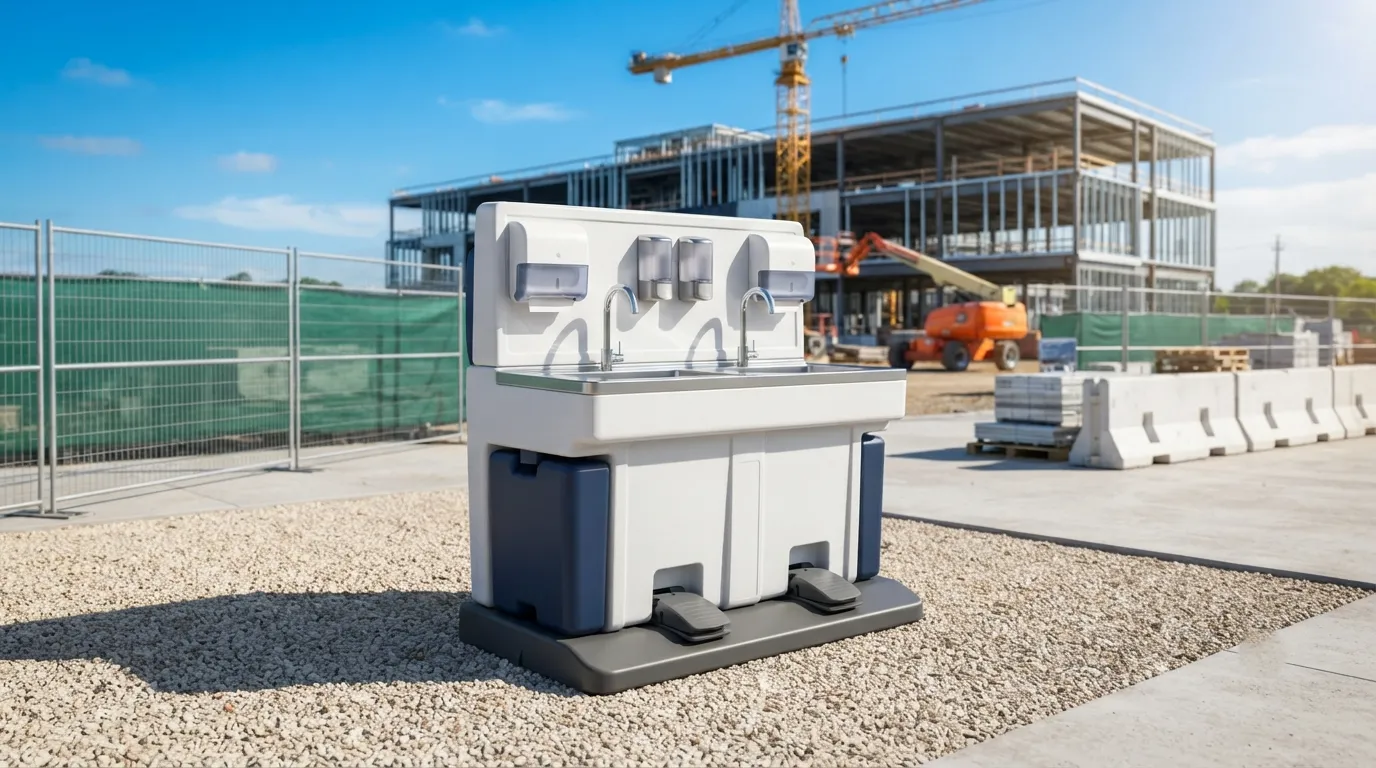
A portable handwashing station carries its own fresh water in a top tank, gravity-feeds it through a spigot or foot pump, and catches the used water in a tank underneath, so nothing drains onto the ground. Soap and paper towels usually mount on the unit itself. That matters because 29 CFR 1910.141(d)(2) requires soap and towels or a drying device at washing facilities, not sanitizer alone. Handwashing station rental pairs naturally with restroom units on food service or medical jobsites. If a crew is applying paints, coatings, herbicides or insecticides, OSHA 1926.51(f)(1) requires washing facilities for that contaminant exposure specifically, which is a different rule than general jobsite sanitation. For farm labor camps, OSHA 1928.110 calls for potable water and handwashing within a quarter mile walk of hand-labor employees. A portable sink rental unit or a hand sanitizer station rental can round out a site that already has toilets but no wash setup. Check handwashing requirements before you finalize a bid on a regulated jobsite.
Do Camping Porta Potties Work the Same Way?
Not quite. A camping porta potty is usually a small self-contained cassette toilet: a tank you carry to a dump station yourself, no service truck involved. Jobsite and event units are different. They stay put and get serviced on schedule by truck, with a vacuum hose pulling waste from the tank without anyone touching it. For weekend camping trips or hunting land outside Winston-Salem, a rented standard porta potty rental unit dropped at a fixed spot is often more practical than hauling a cassette toilet in and out. Delivery trucks need roughly 60 feet of straight clearance to place a roll-off or larger container, so if you are also renting a roll-off dumpster rental for camp cleanup, plan access with that in mind. For septic systems at a cabin or rural property, a typical 1,000-gallon residential tank needs pumping every 3 to 5 years depending on household size and tank capacity; see septic pumping service or how often to pump a septic tank for specifics.
What chemicals go in a porta potty tank?
The blue or green liquid is a deodorizing and digestion treatment that breaks down waste and paper, controls odor, and keeps the tank from freezing in cold weather. It is not the same product used for septic tank cleaning chemicals in a home system. Winston-Salem Porta Pros handles the chemical fill as part of every service visit.
How often do porta potties get serviced?
Weekly is the baseline for light use, per ANSI/PSAI Z4.3, covering up to 10 users over a 40-hour week. Busier construction sites or multi-day events need two or three visits a week. See how often are porta potties cleaned for use-based guidance.
Do porta potties need an accessible option?
Yes, when units are clustered for public or worksite use. ADA Standards 213.2 requires at least 5 percent of clustered units to be accessible, and never fewer than one. Check ADA accessible porta potty or ADA restroom requirements for details.
How many porta potties does a construction site need?
OSHA 1926.51(c) sets the ratio: one toilet for 20 or fewer workers, scaling to one toilet and one urinal per 40 workers above that. Use how many porta potties do I need to size a crew's rental.
Can I place a porta potty anywhere on my property?
Mostly yes on private land, but placement near a public right of way needs confirming with the city first. See porta potty placement guide and porta potty permit requirements before delivery day.
Next step
Get a delivery date
Tell us the address, the dates and the headcount. We size the order and confirm the route.