
Do you need a permit for a porta potty in Winston-Salem?
Not verified as a blanket rule, so treat every job by its footprint. If the unit sits on your own driveway, yard, or a private lot for home renovation work or a backyard party, most homeowners never touch a permit desk. The picture changes once the unit sits on a street, curb strip, or anywhere the city considers public right of way. That is the case where you confirm placement with Winston-Salem before delivery, not after. Commercial builders already juggling construction site services usually have this figured into their planning, but a homeowner doing a first-time project often does not know the line exists. If you are unsure which side of that line your driveway or lot falls on, ask before you order. Our porta potty rental in Winston-Salem team can flag it, but the confirmation call still needs to go through the city.
Where can a porta potty legally sit on a job site?
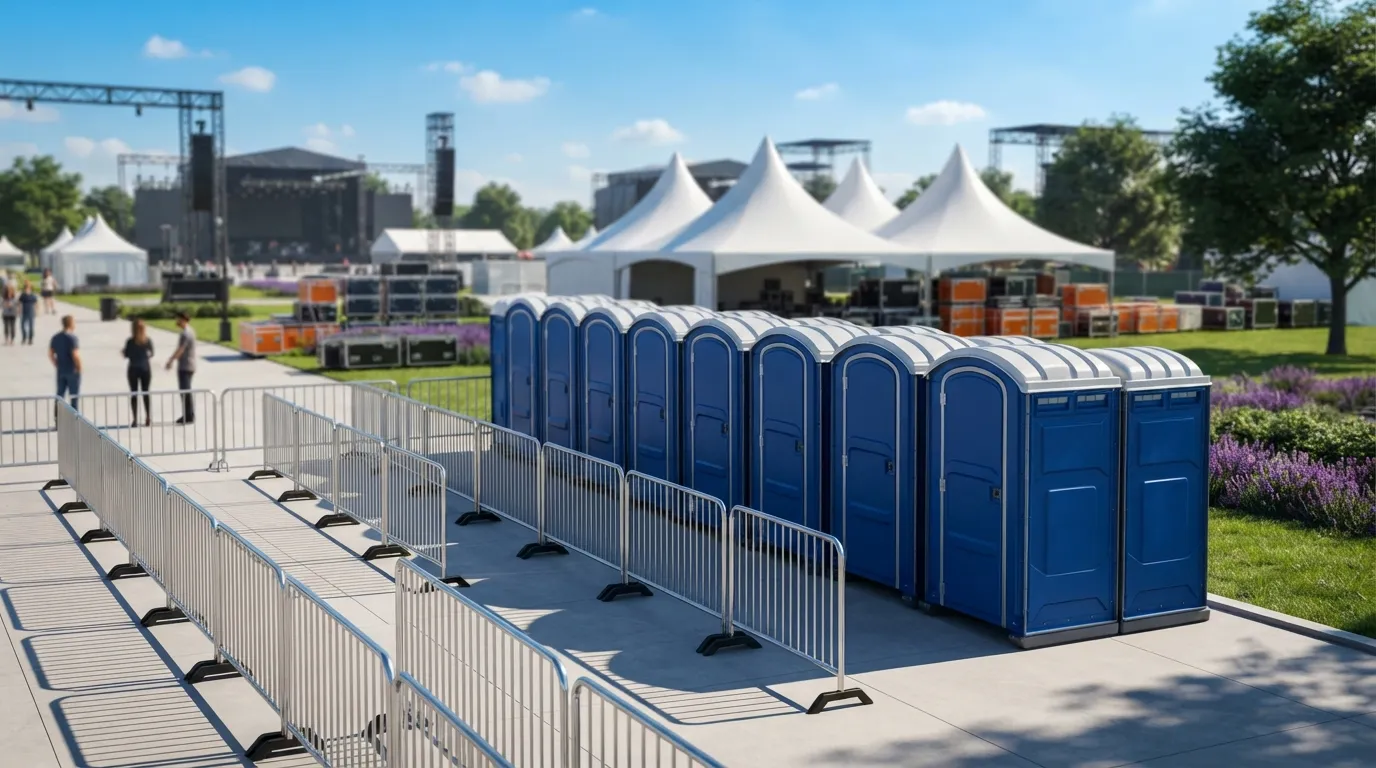
Placement rules protect access, not just appearance. OSHA 1926.51(c) sets the toilet-to-worker ratio on construction sites: one facility for 20 workers or fewer, then one toilet seat and one urinal per 40 workers once you pass that threshold. That ratio decides how many units you need, but placement decides whether they are usable. ADA Standards section 403.5.1 calls for a 36 inch clear route to any accessible unit, and section 304.3.1 requires a 60 inch turning circle in front of it. A standard unit runs about 44 by 48 inches on the ground and stands roughly 92 inches tall, so tight urban lots in Winston-Salem need a real measuring tape, not a guess. Our porta potty placement guide covers ground stability and clearance in more depth. If your project needs a temporary power pole or a light tower running nearby, keep cords clear of the walking path per OSHA 1926.404(b)(1)(ii) and 1926.56(a) lighting minimums.
Do dumpsters and storage containers need a permit too?
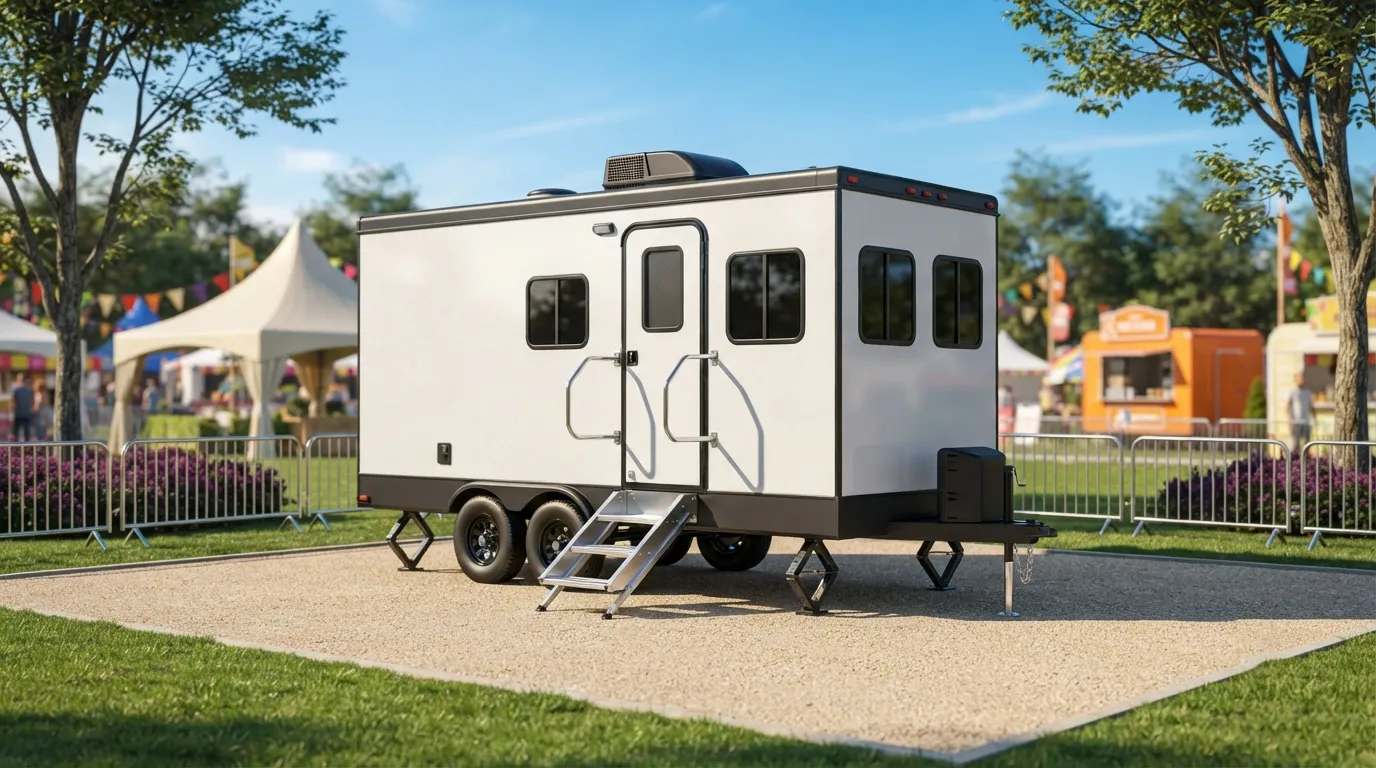
Sometimes, and it depends on the same public-versus-private line. A roll-off sitting entirely on a private lot for a roll-off dumpster rental job rarely triggers a permit review. Drop that same 20 yard dumpster rental or 30 yard dumpster rental on the street in front of a rowhouse, and you are back to asking the city about a permit for a dumpster on the street. This is not unique to Winston-Salem. Delaware porta potty rental customers, portable toilet rental Delaware crews, and anyone chasing a roll-off dumpster rental Delaware or Jersey City dumpster permit question run into the same fork: private lot, usually clear; public curb, usually needs a call. Delivery trucks need about 60 feet of straight clearance behind them to set a roll-off down safely, so measure your alley or driveway before ordering. Our dumpster permit requirements page and what cannot go in a dumpster guide round out what the permit conversation usually misses. The same private-versus-public question applies to a storage container rental or mobile office trailer rental parked for a jobsite office.
What about temporary fencing and power poles?
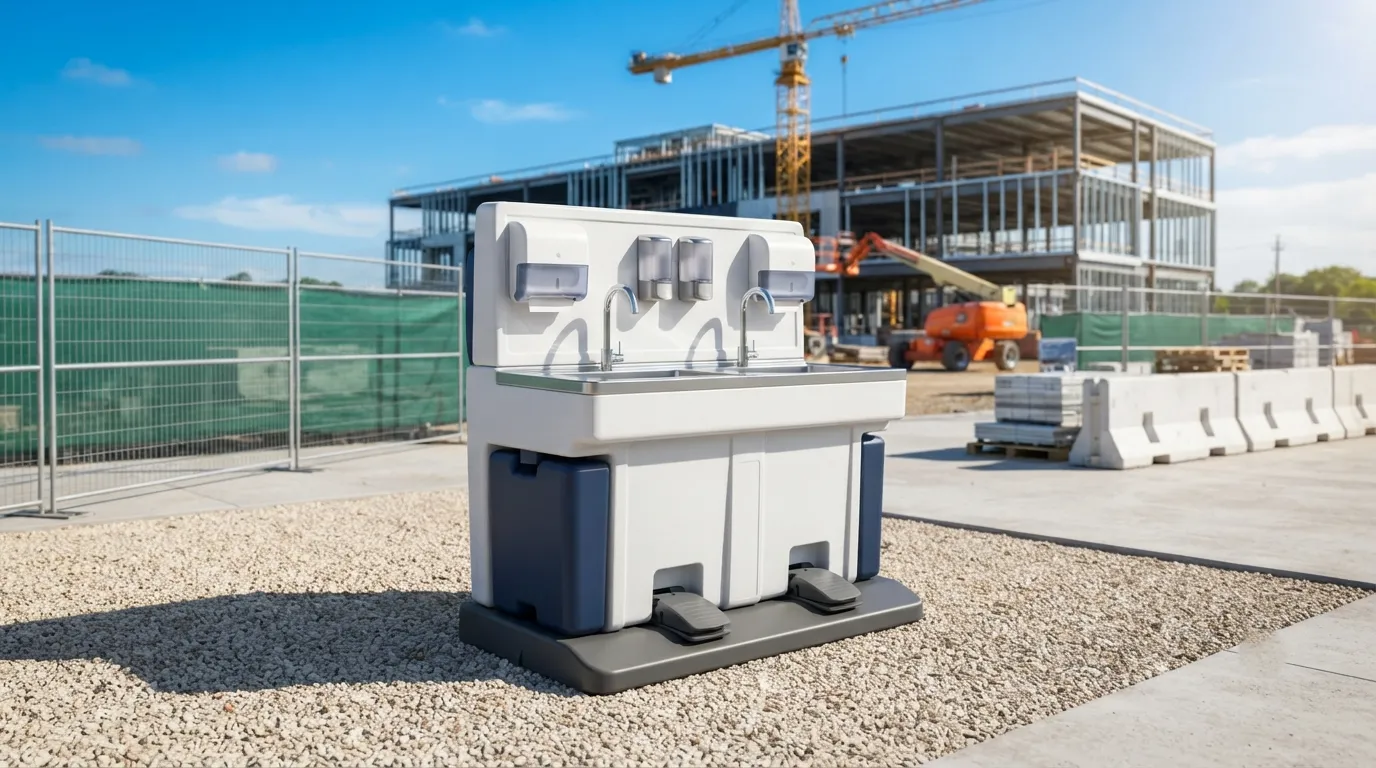
Fencing and power hookups both touch on separate rules from toilets and dumpsters. A temporary fence rental around a work zone should follow OSHA 1926.202, which requires barricades to meet ANSI D6.1 standards, and any storage or fenced yard should keep debris cleared per OSHA 1926.25 housekeeping rules. A temporary power pole permit is a separate animal entirely from a toilet or fence permit, and it typically runs through the electrical inspection side of a city rather than sanitation or streets, so budget separate lead time if your event or build needs one. Crowd control barrier rental for a festival or race often sits at the boundary of both worlds, fencing and public right of way, which is exactly why organizers running a festival restroom rental or marathon and race restrooms setup confirm street closures and placement together, in one call to the city, instead of two.
How many porta potties does a job actually need?
OSHA 1926.51(c) sets the baseline: one unit for 20 workers or fewer, scaling up from there. Event crowds usually plan differently, closer to one unit per 50 to 100 guests depending on hours and alcohol service. See how many porta potties do I need for the full breakdown by crew size and event type.
Does an ADA unit need special placement?
Yes. ADA Standards section 213.2 requires at least 5 percent of clustered units be accessible, never fewer than one. Section 404.2.3 sets a 32 inch minimum door width, and section 308.2.1 caps the forward reach at 48 inches high. Our ADA accessible porta potty page covers unit specs.
Can I place a porta potty on the sidewalk during a renovation?
That is exactly the placement that needs confirming with the city first, since sidewalks generally count as public right of way. Private driveway or yard placement is simpler. Check our porta potty placement guide before you schedule delivery for any Winston-Salem renovation job.
What is the cost difference between daily and monthly rental?
A standard unit runs on a scale from single-day to monthly rates, with monthly always priced higher in total than a single week despite a lower daily rate. See porta potty rental cost and monthly porta potty rental for the full breakdown by duration.
Do I need a permit for a septic pumping truck in my driveway?
No permit is typically needed for a truck servicing your own private driveway or septic system. A residential tank is usually pumped every 3 to 5 years. See septic pumping service for scheduling in Winston-Salem.
Next step
Get a delivery date
Tell us the address, the dates and the headcount. We size the order and confirm the route.