
How fast can you deliver during an emergency?
Speed depends on how far our trucks have to travel and how many units you need. A single emergency porta potty rental can often move same day once roads are clear, especially for sites inside Winston-Salem proper. Crews staging farther out, say near Kernersville 12.4 miles east or Clemmons 9.2 miles southwest, add a little drive time but nothing that should delay a shelter opening. Delivery itself carries its own line item, and that fee typically lands between $100 and $500 for a single day depending on distance and access. If your site is a muddy field or a gravel lot with no clear path, tell us before the truck rolls; a roll-off dumpster rental or a restroom unit both need about 60 feet of straight clearance behind the truck to unload safely. For agencies coordinating multiple stops, our service areas page lists what's already staged near you, and our contact line is the fastest way to reach dispatch when hours matter more than paperwork.
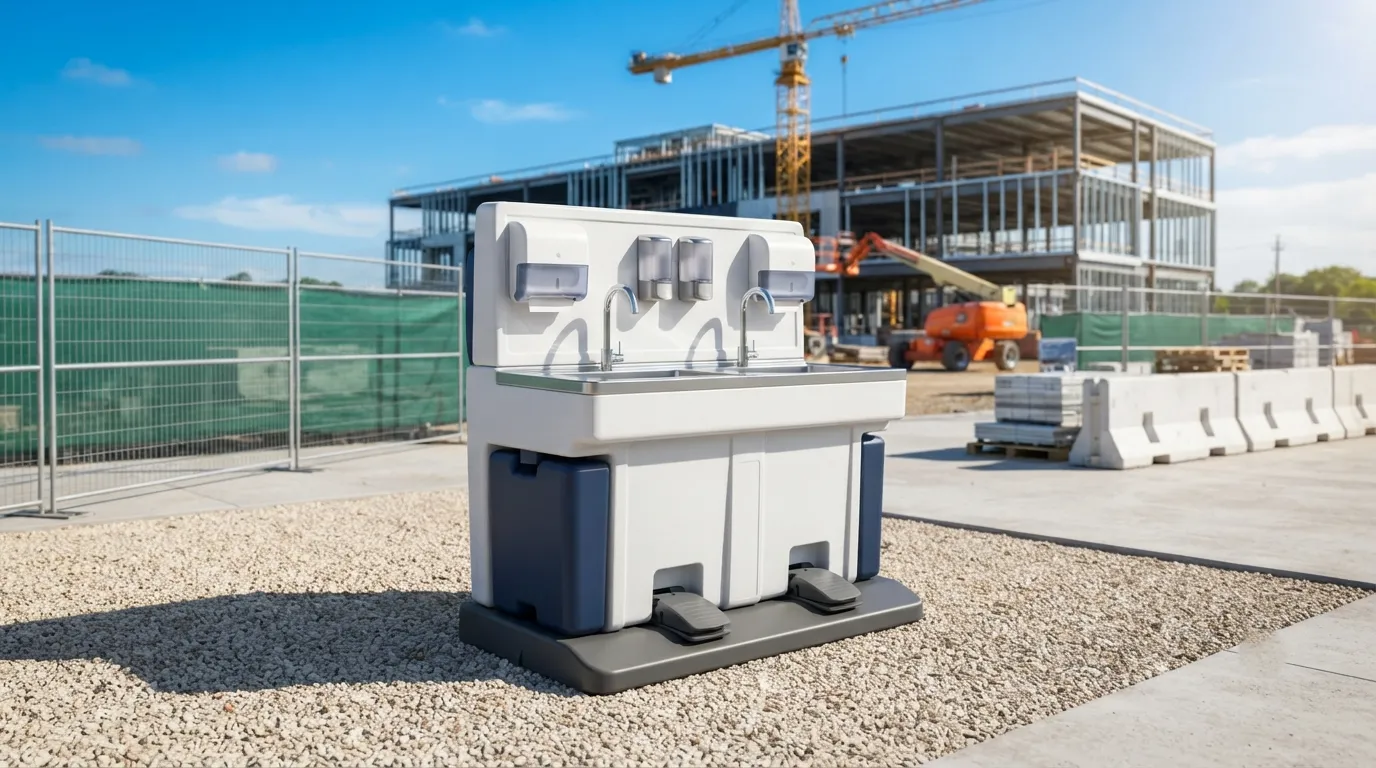
During a widescale outage, we also stand up handwashing station rental units alongside toilets, because a shelter running on bottled water still needs a place for people to wash hands before meals. Under 29 CFR 1910.141(d)(2), any washing facility needs soap and a towel or hand-drying device; hand sanitizer alone does not meet that standard, which matters if your relief site is treating this like standard sanitation and not just gesture. If your crew is also doing cleanup work with cleaning agents or coatings, OSHA 1926.51(f)(1) applies specifically to washing after paints, coatings, herbicides or insecticides, and that's worth knowing if debris crews start handling treated materials.
What do shelters and relief sites actually need?
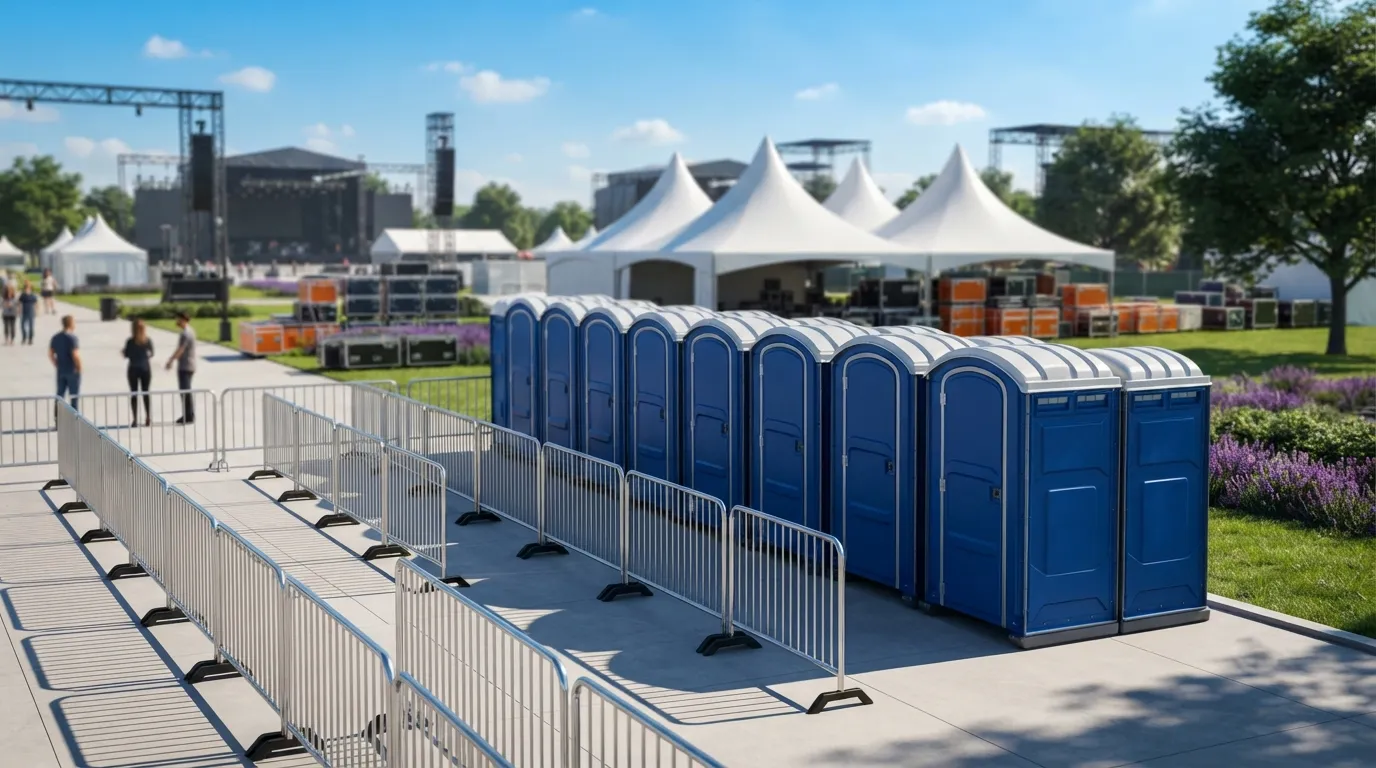
A shelter needs enough toilets for the number of people staying, a way to wash hands, and often a way to get debris off site once the immediate crisis passes. For occupancy planning, OSHA 1926.51(c) sets the baseline ratio for construction-type sites at one toilet for 20 workers or fewer, scaling up as headcount grows, and it's a reasonable starting point even for a shelter population when nothing more specific applies. If your shelter serves someone using a wheelchair or has limited mobility, ADA Standards section 213.2 requires that at least 5 percent of a cluster of single-user units be accessible, never fewer than one, so our ADA accessible porta potty option should be part of the order from the start, not an afterthought once someone asks.
Water access matters too. OSHA 1926.51(a)(1) calls for an adequate supply of potable water at any place of employment, which is worth remembering if your relief site is also functioning as a work site for cleanup crews. For larger operations, a restroom trailer rental gives you flushable stalls and a sink in one unit, which holds up better than stand-alone toilets when a shelter runs for more than a few days. Debris removal is its own problem; storm cleanup generates roofing material, downed limbs and soaked drywall fast, and a construction dumpster rental or 20 yard dumpster rental clears it before it becomes a hazard or a mosquito breeding ground.
Why plan sanitation before the next storm hits?
Because during an actual disaster, everyone is calling at once, and the crews with a standing plan get served first. Winston-Salem sees enough seasonal weather that having a relationship with a supplier before hurricane season or ice season starts is worth more than a fast phone call after the fact. A temporary fence rental around a staging area keeps donated supplies secure and keeps foot traffic away from generators and fuel; OSHA 1926.202 requires barricades to conform to ANSI D6.1, so if your relief site is fencing off a hazard, do it to that standard. Lighting matters after dark too, particularly around latrines and supply tents, and a light tower rental paired with a temporary power pole keeps a site functional once the grid goes down. If your organization runs relief operations more than once a year, read our porta potty rental checklist now, not during the next flood watch, and bookmark emergency septic service in case an existing septic system backs up under storm load. Storage matters during recovery too; a storage container rental keeps donated goods and tools dry and locked between shifts.
How many toilets does a shelter of 100 people need?
Using OSHA 1926.51(c) as a guide, 100 people would need roughly five toilet facilities at the 1-per-20 ratio for smaller counts. Our how many porta potties do I need guide walks through the math for shelters, events and job sites.
Can you deliver on weekends or holidays during a storm?
Yes. Emergency deliveries don't wait for business hours, and weekend service fees typically run $400 to $1,200 depending on scope. Call Winston-Salem Porta Pros directly rather than waiting for a standard quote form.
Do you provide handwashing stations without a full restroom order?
Yes. A stand-alone portable sink rental or hand sanitizer station rental can deploy alongside existing facilities, useful when a shelter already has plumbing but needs more handwashing capacity fast.
What happens if flooding damages an existing septic system?
Flooded septic systems often need pumping before they're usable again. Check our septic tank warning signs page, and call emergency septic service if tanks are backing up or overflowing.
Is a restroom trailer better than standard units for long relief operations?
For stays beyond a few days, yes. A 4 stall restroom trailer gives more capacity and flushable fixtures, holding up better than stand-alone toilets when a shelter runs for a week or longer.
Next step
Get a delivery date
Tell us the address, the dates and the headcount. We size the order and confirm the route.